Small House Storage Ideas
A practical step-by-step guide to small house storage ideas, including preparation, instructions, common issues, tips, and next steps.
Small House Storage Ideas
This guide explains how to approach small house storage ideas, including the preparation, practical steps, common mistakes, and final checks that help you finish with confidence.
Before You Start
Step-by-Step Instructions
Quick Reference
Common Problems When You Implement Small House Storage Ideas
Even with the best intentions, you might run into a few common hurdles when trying to optimise storage in a small home. Understanding these challenges and knowing how to overcome them will help you succeed.
1. Still Feeling Cramped After Decluttering
Problem: You’ve decluttered, bought new storage, but your home still feels tight and cluttered.
Solution: This often means you haven't decluttered enough or that your storage solutions aren't truly effective for your space. Revisit Step 1 and be even more critical. Consider if you're holding onto items "just in case" that you realistically won't use. For sentimental items, could a photo album or a digital scan suffice? For items you genuinely need but use rarely, consider off-site storage options if available, such as a friend's attic or a small storage unit, though this comes with a cost.
2. Storage Solutions Making Things Look Messier
Problem: You've bought open shelves or clear bins, but now your organised items just look like more clutter on display.
Solution: Open shelving works best for items that are aesthetically pleasing or neatly uniform. If your stored items are varied or inherently messy (like cables or small craft supplies), open shelving might not be the best choice. Instead, opt for closed storage like cabinets, opaque bins, or decorative boxes with lids. This hides the items from view, creating a calmer, less visually cluttered environment. Ensure your storage solutions blend with your decor, rather than standing out as separate items.
3. Forgetting Where Things Are Stored
Problem: You've created brilliant hidden storage, but now you can't remember where you put anything.
Solution: Organisation is only effective if it's easy to retrieve items. The simplest fix is to label everything. Use clear labels on boxes, bins, and drawer fronts. For deeper storage, create an inventory list in a notebook or on your phone. Assign specific "homes" for items and be consistent about putting them back. If a system is too complicated to remember, it's not sustainable.
4. Buying Too Many Storage Items
Problem: In an effort to get organised, you've bought an excess of baskets, bins, and organisers, which are now contributing to the clutter.
Solution: This is a very common trap! Always declutter first, then measure your space, and *then* make a list of exactly what storage items you need. Start by buying a few essential pieces, see how they work, and then purchase more only if necessary. Avoid impulse buys. Remember, storage is a tool for organisation, not a substitute for decluttering.
Advanced Tips for Small House Storage Ideas
Once you've mastered the basics, these advanced strategies can further refine your small home's storage and organisation.
1. Utilise Digital Decluttering
Much of our physical clutter comes from paper: documents, bills, photos, and manuals. Adopt a habit of scanning important documents and storing them digitally in cloud services or on an external hard drive. Shred physical copies you no longer need. This can significantly reduce the need for filing cabinets and document storage boxes, freeing up valuable space.
2. Custom Built-Ins for Awkward Spaces
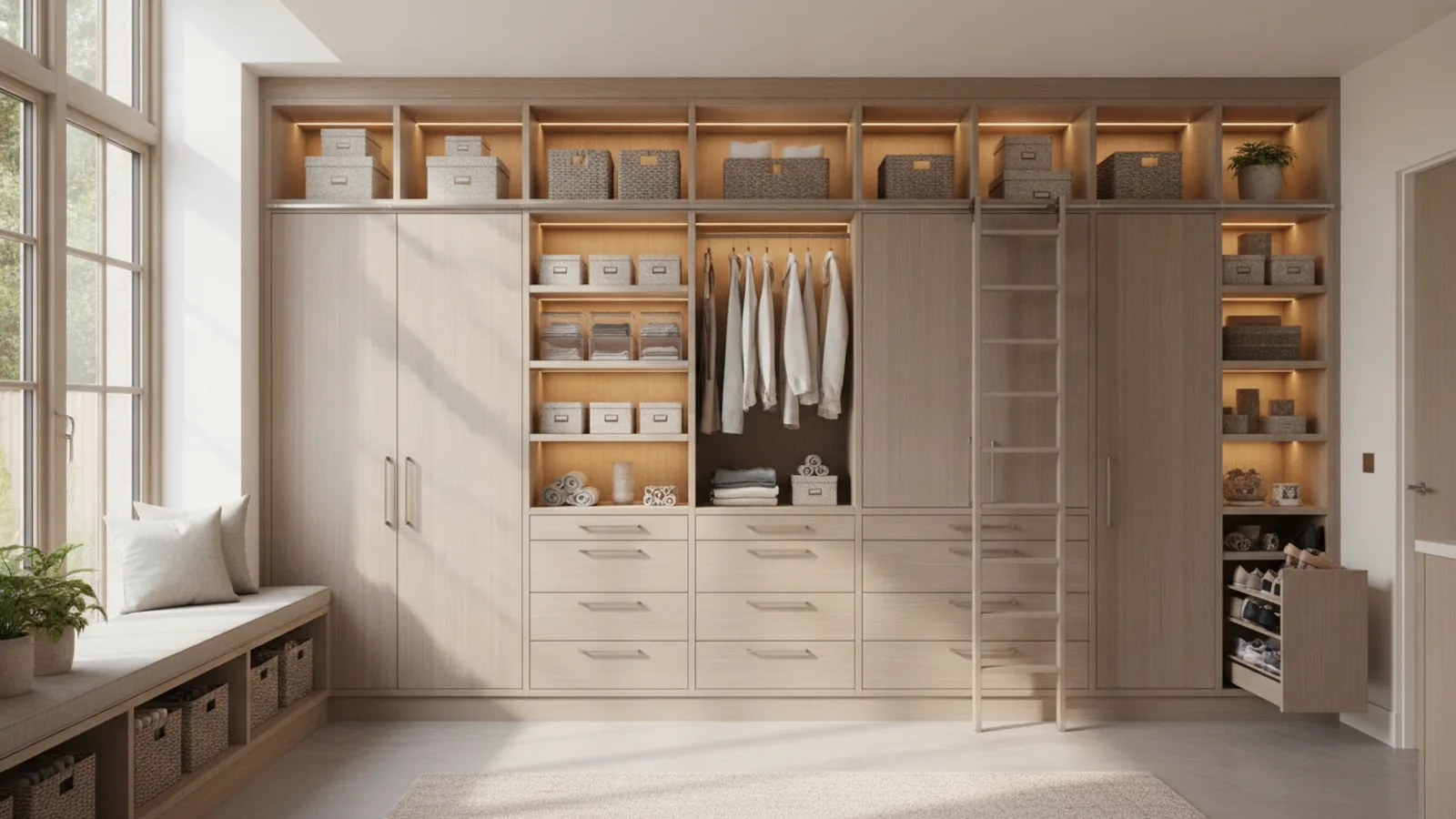
If your budget allows, consider investing in custom built-in shelving or cabinetry. This is particularly effective for awkward nooks, sloped ceilings, under staircases, or oddly shaped walls that off-the-shelf solutions can't maximise. Built-ins can blend seamlessly into your home's architecture, providing tailored storage that looks sophisticated and makes the most of every available inch.
3. Consider Mobile Storage Solutions
For items that need to be moved frequently or serve different functions in different rooms, mobile storage carts with wheels can be incredibly useful. A kitchen trolley can double as extra counter space or storage for frequently used appliances, then be rolled out of the way. A small craft cart can move from living room to bedroom as needed. This flexibility is key in dynamic small spaces.
4. Seasonal Swaps and Rotation
Not everything needs to be accessible all year round. Implement a system of seasonal rotation. Store out-of-season clothing, bedding, or decorative items in less accessible spots (e.g., under the bed, in an attic/loft, or high shelves). When the seasons change, swap these items out. This keeps your immediate living areas clutter-free and makes the most of your available storage capacity throughout the year.
5. Maximise Unconventional Spaces
Look beyond the obvious. Can you add a slim shelf behind a door frame? Is there space for a narrow pull-out unit between your fridge and a wall? Can you install a shallow cabinet in the unused space above a toilet? Every small gap or corner might be a potential storage spot. Be creative and measure meticulously.
Small House Storage Ideas FAQ
How often should I declutter a small house?
For a small house, frequent, smaller decluttering efforts are more effective than infrequent, massive ones. Aim for a quick 15-minute tidy-up daily or weekly to put things back in their place and deal with new items. Schedule a more thorough, targeted decluttering session for specific areas (like a wardrobe or pantry) quarterly, and a full home decluttering annually.
What's the best type of storage for a small kitchen?
The best storage for a small kitchen involves a combination of solutions: vertical storage (wall shelves, pot racks), drawer organisers (dividers, tiered inserts), and multi-functional items (stackable containers, pull-out pantry units). Focusing on making the most of internal cabinet space and wall space will yield the biggest gains.
Can I really make my small home feel bigger with smart storage?
Absolutely. By reducing visible clutter and implementing smart, space-saving storage solutions, your home will not only be more functional but will also feel more open, airy, and expansive. Clear surfaces, well-defined zones, and hidden storage all contribute to a sense of calm and increased perceived space, even if the actual square footage remains the same.
Is it worth investing in custom built-in storage for a small house?
For long-term residents or those with very specific storage needs for awkward spaces, custom built-ins can be a valuable investment. They offer tailored solutions that maximise every inch and often add to the home's value. However, they can be costly. It's often best to start with more affordable, off-the-shelf solutions first to understand your true storage needs before committing to custom work.
Final Checklist for Small House Storage Ideas
- Have you completed a thorough decluttering session?
- Are you actively utilising vertical space with shelves, wall mounts, or tall units?
- Have you identified and used under-furniture storage opportunities?
- Do your furniture pieces offer hidden storage or serve multiple purposes?
- Are you using door-back or wall-mounted organisers where appropriate?
- Is your kitchen and pantry optimised with internal dividers and stackable containers?
- Are bathroom essentials stored efficiently, either hidden or neatly contained?
- Is your wardrobe organised to maximise hanging and folding space?
- Have you incorporated discreet or decorative storage solutions to hide clutter?
- Do you have a regular routine for maintaining your organised space and preventing new clutter?
- Have you measured all spaces accurately before purchasing any new storage items?